


#346: 35 Years of Aloha – The Pacific Audio & Communications Story
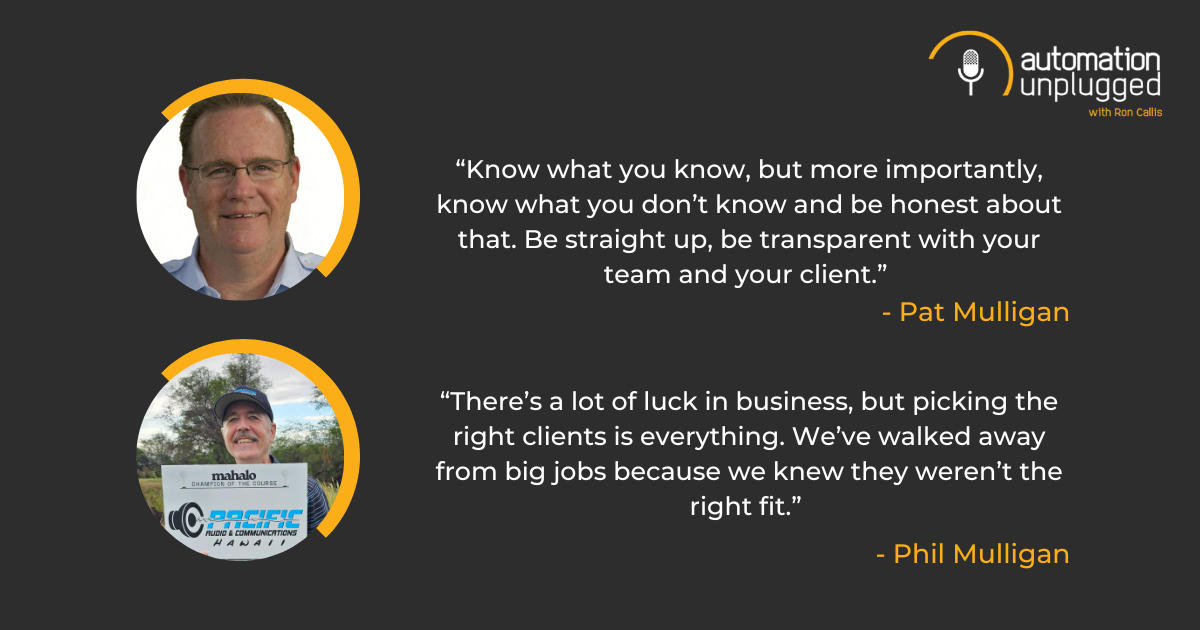
Celebrate 35 years of innovation with Phil and Pat of PAC Hawaii as they share lessons in leadership, longevity, and island-style integration.
In this week's episode of Automation Unplugged, we’re joined by Phil and Pat Mulligan, the brothers behind Pacific Audio & Communications, also known as PAC Hawaii.
Phil and Pat are celebrating an incredible milestone — 35 years in business as one of Hawaii’s leading integration firms, with offices spanning multiple islands and a team that’s built its reputation on craftsmanship, transparency, and aloha.
Phil founded PAC Hawaii back in 1991 after running a successful electrical contracting business on Maui, and a few years later, Pat joined after serving eight years in the U.S. Army’s 82nd Airborne Division and earning his degree in Electronics Engineering. Together, they’ve grown PAC from a small man operation into a multi-island company designing and delivering world-class residential and commercial technology systems.
About this episode:
In this episode, Phil, Pat, and host Ron Callis discuss:
- Their 35-year journey from a startup to one of Hawaii’s most respected integration firms
- How they’ve built a lasting company culture through honesty, teamwork, and strong community roots
- Their vision for the next generation, including mentoring future leaders and transitioning ownership to their team
SEE ALSO: #345: Smarter, Not Harder: How Small Businesses Can Actually Use AI
Transcript
Ron:
Hello. Hello there. Happy New Year and welcome to another episode of Automation Unplugged. , we are, , , a couple of weeks into January, 2026. I hope y'all had an amazing holiday season, and you're all at this point back in gear ready to be driving forward towards a successful and profitable and rewarding 2026. I know for some of you, you had a, , a great year in 2025. , some of you, 2025 was a little bit harder than you, you wanted or expected, maybe, , flat. As they say, flat is the new up. Maybe a flat year over year was your experience. , maybe you had a down year, regardless. , you're here with me now. You're gonna tune in and listen to, , hopefully a fun interview where you're gonna learn from some industry veterans. They've been there, done that, , lived to tell about it. And, I couldn't be more proud and honored to have returning guests. , Pat and Phil, , from Pacific Audio and Communications out of Hawaii. , these are, , longstanding clients of one Firefly. , good friends in the industry. And, , just all around. Great, great guys, great operators , friends of anyone in the industry that's ever met them. They're always there to help and assist, , whenever, , possible whenever, wherever. And , let's go ahead and get it started. 'cause we actually have something to celebrate. , they're, they're known as pac, PAC. , let's, let's go ahead and bring in, , pat and Phil and let's, , let's celebrate this exciting news with them that you're gonna learn about here in just a minute. Hello, gentlemen. How are you?
Pat:
Aloha. Aha.
Ron:
Aloha.
Pat:
Aloha.
Ron:
Aloha. Pat, what is the exciting news here In 2026,
Pat:
we get to announce our 35th anniversary in business. , you know, Phil can go into the details of how it started, 'cause I wasn't part of that in 90, 91. So he can start that up and, and, and tail in a bit, but yeah, he can, , he can chime in on that 91, , startup,
Ron:
that 90. All right, we're gonna get into that. Pat, where are you coming to us from today for the, the show?
Pat:
I'm actually at my home office on Maui, so we're glad to be here and thank Ron and your team for making it happen.
Ron:
Hey, our pleasure. Phil, where are you coming to us from? Yes.
Phil:
my home in Wale. Um, and, , you know, the, our main office originally started on Maui. So Pat and I are both located on Maui,
Ron:
both, , and, , do you, are you guys, do you, , are your, your homes, do you guys live near each other?
Phil:
,
Pat:
yeah. Eight,
Phil:
eight minutes away. Maybe
Ron:
it's an island. You can't get it so far away. You can't
Phil:
go too far.
Pat:
Yeah.
Phil:
Same general vicinity,
Ron:
same general. If you were to jump on a bicycle, how long would it take you to bicycle to Pat's house?
Phil:
10 minutes probably.
Ron:
Okay. It's pretty close. It's pretty close.
Phil:
Yeah. Yeah. It, it we're not maybe, I don't know, a couple of miles.
Ron:
So Phil, , it is possible there are people that are, are watching us right now on YouTube, or maybe they're listening to us on their drive to the job site or maybe out on their, their morning walk or exercise. Give a high level, um, explanation of PAC to the audience. What, what is the business? What type of projects do you guys do and, and where do you do those projects?
Phil:
You know, it, it's, um, it's one of those things that the projects have changed over the years, but, you know, the majority of our clients are West coast, um, tech. Business people, you know, CEOs, , those types of clientele. We have our occasional celebrity, you know, clientele. , as well. We've had, , a billionaire client, , or actually two billionaire clients, , over the years. Um, so it's, it's a gambit of a lot of different clientele. , and the, the change of moving to different islands, , brings a whole nother , understanding of, you know, different clientele. , Oahu has a more local, , you know, there are Fortune 500 companies on Oahu, so they have a lot of high-end local people that live, you know, there. Most of our other clientele that are on the outer islands are, you know, temporary. Residences where they're here for, you know, a couple of weeks every, you know, couple of months or so, or you know, more typically it's, you know, Christmas, Thanksgiving, , kind of timeframe.
Ron:
And, , today, , in 2026, when you look back, you know, like say the last 12 months, 24 months, what percentage of your projects were resi versus commercial?
Phil:
You know, we've actually changed over the last probably two years where we're probably now 50 50. We're doing a lot more commercial, , now, specifically because the office on Oahu, , and some of the mainland work that we're doing, um, we have, and the reason that we're doing mainland work is we have a contact that is an investment company that's based out of Oahu that. Go out and buy hotels, renovate 'em, and then sit on 'em for a couple of years and then sell 'em. Sure. And so that contact has brought in a ton of work for us in the hotels that they have purchased that are, they're remodeling
Ron:
now. Where I started, , when I brought you guys in, I referenced your 35th anniversary, and then Pat quickly said, yeah, I wasn't here yet. My brother started that back in, in 90, 91. What, , , what, what are maybe your most immediate reflections just at a high level, knowing that you, you and your brother have been in business now for 35 years? I mean, there, there aren't many businesses in general that can say that, and there certainly aren't that many audio, video or automation companies that can say that.
Phil:
You know, honestly, I think clients. You know, and picking the right clients. Right. And there's a lot of luck. There's a lot of luck in it. Um, I think that, , if, if you understand the need of the client and you pick the right clients, and I'm very specifically saying that, um, there's clients that we walked away from, large jobs that we walked away from just knowing that it was just, it was not gonna work.
Ron:
Hmm.
Phil:
Um, and there's some of those jobs that you try to get and you're kind of upset you to, you don't get. But, and this is where I think the luck comes in down the road, you find out that, oh my gosh, it was such a nightmare project. You know, and we just saved, you know, years of, of my life not having to deal with that project. So I think, yeah, you gotta hustle, you know, and, and, and do all of that. But if you can figure out how to pick and choose the right clients, that is the biggest, you know, , thing that I can try to give to other people is, you know, and, and it takes, it takes a while to figure out, it takes a while to read and learn how to read clients, you know? And
Ron:
what are some of the clues? Like give a scenario. 'cause there's, there's, there's entrepreneur entrepreneurs that are younger in their journey. Earlier in their journey and, , they're leaning in right now. Hearing you say that, what would be some of the examples or clues maybe that, that get your spidey senses tingling that say you and Pat, you're like, man, we probably shouldn't work with this client.
Phil:
It, you know, I think it's everybody's kind of individual in that aspect. And I think, again, I think we've been really, really lucky. We've had only two clients that we ever walked away from. Um, and we've had a couple of clients that we did and we're able, able to, um, facilitate a meaningful breakup with. Um, but the majority, and, and I got a knock on wood. I mean, I, how I, how we. Navigated this, you know, it, it's hard to put into a perspective.
Ron:
It, it's gotta be more than luck though. I do believe in
Phil:
luck. It, it's, yes, it, it is. And I think being real to the client, not, um, you know, there, there's a constant need to sell. Right? And that's not our mo you know, our MO is to ask the client, you know, what they would like their systems to do and then allow us to, you know, facilitate that for them. Um,
Pat:
and one thing you do, Phil, that's good too, that you, you couldn't do back in the day, is once, once we hear about a client or an architect or a designer or whatever it is. Phil's been good at it where he would actually go on LinkedIn and look this person, do some research on this person, you know, since the Internet's come available and you got LinkedIn and a lot of these things. So that's changed over the last, you know, 10, 15 years prior to that. It was definitely different, but Phil's always been good on that, is researching the partners, you know, be that the client and or the build the build team.
Ron:
Yeah, that's, that's, that's, that's really interesting. Pat, what jumps out to you as, just at a super high level, I'm gonna dig deeper, but, , before we go there, just at a high level, what do you think is necessary or maybe attributed to you guys being around for 35 years and being well respected and, um, as relevant today as you ever have been?
Pat:
Well, a lot of it's gonna mimic what Phil said, the, the, the clients and that, that partnership is, is there and, and understanding that, and, and like Phil said, being honest with the. We're not salespeople. I'm a tech, you know, and I'll tell somebody that straight up, I'm not a sales guy, but we're forced to do it because that's the business, right? We're in business of selling, servicing and selling. Um, but to me, the, the, the higher part of this is being honest. You know, one of my models is know what, you know, be good at what you know, but more importantly, be honest about what you don't know, right? Because when you start fibbing or lying or, or, or, or taking things in an area that you just don't know now you're, you're, you're pro probably looking at problems, right? You're getting off that beaten path. , and we've always stayed on the beaten path. When it goes off the beaten path, that's when those red flags pop up that Phil was talking about earlier, right? Yeah. And we, we, after 35 years, you learn some of those red flags real quick and you don't wanna repeat those again. So for us, it's being honest, not being that salesperson. , and I've gotta, I gotta bring it to the team. Phil, what are we at now? 32, 34. I just go ahead.
Phil:
We're we 7 27 27. Yeah.
Ron:
27. I'm curious, Phil, today, current state, how, how do you structure the company? Is there a leadership team or like, how do you think about organizational structure?
Pat:
Right, and that's where I wanted to go, Ron is, is and all that. We'll chime in on that, but that team is very important. Yeah. Especially opening up four offices, plus you've got satellite operations on the mainland. That's a logistical thing. Anyway. Phil can chime in
Phil:
it, you know, it, it is and it's really interesting to, you would think that, you know, Hawaii is Hawaii and the islands that we have here are similar. It's, it's not the case. Um, they're so dissimilar. The, not only the, the environments that you're in, you know, Kauai being, you know, one of the wettest places in the world, , causes, you know, other issues, um, you know, Maui with it being a much drier than it has been, you know, is causing issues. Um, and so it, and I guess, you know, it, it, it may be similar to, you know, other companies that have multiple locations in a state, you know, say a large state, and they, they, you can't like drive from one location to somewhere else. And, and you have multiple, you know, offices. Um, and so it's challenging that, you know, we, we have to have, you know, specific locations, but it's the people, you know, you, we have GMs on each island. You know, we have, , a COO that kind of manages all of the internal stuff that's going on. Um, and then, you know, the, the local crews that are doing all the work and, and, and those types of things that, you know, so it, it's, it's a larger, and this only has happened in the last, you know, five years. Um, you know, we were Maui based and Kauai based for a long time and opened up, , big Island in Oahu 2019 and 2020. All right. During COVID. And, , so what led to opening
Ron:
those islands up? Was it demand?
Phil:
Well, there's always demand. Demand or
Ron:
opportunity.
Phil:
more opportunity than demand. Um, and I think another thing that you have to do is you have to take. Hold of opportunities that come your way. And there was an opportunity that came our way to basically start up on the big island with projects already, you know, moving forward with money ready to be, you know, billed. , and it was figuring out how does, how do we take advantage of that opportunity? Um, you know, it was a, a contractor that was having a hard time, , monetarily. He was in bad shape. And so we came in and, and said, okay, we'll take over the projects. He, he had lost his license. He couldn't do the work. , we'll take over the projects, we will hire the crew, we will structure it as we structure our other locations. And, um, it worked out well. You know, it took a little bit of time to understand that area. , and you know, it's actually right now one of our biggest producers.
Ron:
Wow.
Phil:
Yeah.
Ron:
You didn't see that in 19, you know,
Phil:
19
Ron:
or 20. We knew,
Phil:
yeah. We knew that there was a lot of work that was going on there, but it was like, okay, how do we facilitate not only, you know, having the, the connections to the contractors and the builders, but then how do we start an office? How do we find the installers? How do we, you know, all of this stuff that would've had to come with starting a brand new location. And I know that, you know, a lot of the larger. You know, , Paragon and, and, , , what's the other large
Pat:
ht
Phil:
ht A ht And, and those types of people, you know, it's easier to say buy out an existing company, right, than to start new, right? Because there's infrastructure already there. You already have the people, you, you know, all of that stuff. And so I could see now, you know, that reasoning and, and what they were doing, why they were doing it,
Ron:
that, that, that makes sense. , I wanna go back into the history of the company, particularly for this, , this, I'll call it this 35th anniversary celebration for you guys. But before I go there, I do, I'd love to hear a reflection. , pat I'll start with you. Just when you look back at 2025. What, , how overall, how was the year? What, what was good? What was, what was weird? What was bad? What, what are your thoughts about 2025 just in your, um, in the spectrum of all the years you guys have been at it?
Pat:
Yeah, I mean, we're, we're dealing with an election year, which causes issues regardless of the party and all that. And that always happens. Um, I think it's like we're seeing like everybody else, the bigger struggle right now is finding bodies that would, if you were to ask me today, what's, what's the single hurt, single biggest hurdle right now is, is finding competent bodies. , and Ron, you and I had talked about this at the ProSource event, 'cause you're, you're coming up with some ideas about working with colleges and stuff like that, which I think is a big need in our industry because for every, , five trades people that are retiring or exiting. There's only two in the next generation that are coming up that are being prepared. And I'm not even talking about our industry. I'm just talking general. No, it's,
Ron:
it's
Pat:
a
Ron:
global shortage on apprentice level. You know, people that society needs. Electricians, plumbers.
Pat:
Plumbers, yeah.
Ron:
Low voltage contractors, roofers, you know, builders, you name it.
Pat:
Yeah.
Ron:
Society has, has programmed the youth to think that the only ticket to success is a four year degree,
Pat:
or YouTube or, or, you know, something to that effect. Which again, there's that, that, that's not, , that, that
Ron:
it's not bad, but it's not accurate what society actually needs. I mean, you can be a youth, I mean, you could be in your early twenties and practicing a trade and running circles around in terms of income, what someone coming out of school with a four year degree. Um, if it's, I don't wanna pick on liberal arts degrees, but if it's a. Certain degrees you're gonna make, you know, you, you have a probability of doing well, but a lot of degrees. It's very uncertain.
Pat:
Yeah.
Ron:
Um, so yeah, I'm, I'm right there with you. I, I totally agree.
Pat:
Well, and I think that's part of the reason why you're doing what you're doing, you know, so
Ron:
Well, it's, there's a, there's certainly a hiring shortage. Now you in, in Hawaii, it may be just, , describe to those that are not from Hawaii or haven't visited there. What's the extra layer of friction you have in terms of trying to, to build your talent pool?
Pat:
We're surrounded by water, so you ain't driving anywhere. So logistics here are a big deal. I mean, just not even talking about bodies, right? I mean, that, that's a whole separate enemy in itself.
Ron:
What if there are people listening, pat,
Pat:
oh well,
Ron:
that want to be in Hawaii and this is their dream place to live. Would you, , feel their inquiries.
Pat:
Oh, we'll field the inquiries, but after 35 years, I can count on one hand how many, sadly, that have come from the mainland over.
Ron:
And why does that not work there? There's, it's, it has a name,
Pat:
the rock fever. It's part of it,
Phil:
it's part of, that's
Pat:
medical is another one too, because if you've got any type of medical things, I'm not saying that the medical system here is, is like really bad. But again, we're, we're logistics here are different. We're, we're, we're isolated, you know, we're the most isolated but populated, um, , landmass in the world, right? Yeah. Um, yeah. And there's farther places, but there's not a lot of people on 'em. But, so you gotta think of those logistics. So getting bodies here, it's a, it's a different animal and the culture here is different. And you can't just get in a car and drive. Right. And a lot of people on the mainland are like,
Ron:
you can drive. You just can't drive very far.
Pat:
Right, exactly. So there's a, there's a big, um, I don't know what the word is that I'm looking for, but there's a big caveat with when we hire from, from, you know, outside the state, those concerns are, okay, are the medical issues, are you somebody that is very outdoorsy that wants to, you know, get in the water and get in the ocean and go hiking and do these types of things? Because we don't have, at least Maui, the outer islands don't have the bigger population like Oahu does, where they've got dance club and nightclubs and these types of things. Kauai for one, they're shut down at like six, 7:00 PM They, they really don't have a lot going on there. You know, Maui is kind of that in-between. So when we start hearing or hiring or, or getting inquiries like that, there's a couple, , extra check marks. We've gotta check when we're talking to those type of people.
Ron:
Phil, look like you wanted to weigh in on this.
Phil:
Cost of living, you know, it's probably the highest cost of living in the states anywhere. I mean, our, I think the average single family home, , if you were to try to purchase, um, million one, I think now, and I think condos are at 700,000 maybe, something like that. You know, our, our gas, , is typically around $4 to four 50 a gallon, depending on seasonal, um, you know, food and, and all of that stuff that has to be shipped in is expensive. Um, and, and you know, you'd asked, you know, regarding, you know, how 2025 was, you know? Yeah. And, and I'm sure you know, number one on everybody's list was tariffs.
Ron:
Yeah. You
Phil:
know, and we're still. You know, still trying to figure that out. Not outta the woods. Not out of the woods yet. And you know, it, it, it, it's very, very difficult to have a small business where you cannot understand, you know, what your costs are gonna be and try to present those costs to somebody to say, you know, this is what it's gonna cost. I mean, we've, we've had to almost go back to COVID, , type of, um, contracts where it says, we don't know what the cost is. We could tell you now what it is, but, you know, say, you know, we're, you know, usually our large projects, you know, are in construction for two years, so we're pricing something out, you know, a year before we have to buy it, TVs or whatever. Right. And on our contracts now are. This is the number, what it is now. I can't tell you what it's gonna be when we go to order it. And unfortunately, you know, that's, that number is gonna be done as a change order, , to the contract. Um, and it is, you know, some of the manufacturers have put line item tariffs, you know, and what the costs are and showing that some of 'em incorporated it into, you know, their pricing. Um, so again, very difficult to figure out, you know, how things are gonna get priced out. Was it 2025 issue, which, you know, is still ongoing.
Pat:
Yeah. And then Rob, we're still reeling from 2023 too with the fires, right? I mean, again, Maui within itself,
Ron:
we
Pat:
have
Ron:
that fill fill us in e everyone listening I'm sure is, is not remotely as close to it as you are physically and your involvement. What, what is the state of the, the fire cleanup, how is Maui recovering? I mean, it was, it was clearly devastating. Maybe even just state for folks that aren't fully tuned into what happened, what happened, and then what's the current state of things.
Pat:
Sure. So I'll step back a little bit, um, , just to give people that are listening or watching, kind of an update on where, where I'm at. Um, before I joined Phil in 94, 95, I was in the military and still am to, to a certain extent right now. , I was with the Army, , I was at the 82nd Airborne and I got attached to the Special forces third group out of Fort Bragg. So, traveled the world, did all the, all the things. Fast forward a little bit more, um, up to 2023. , I'm involved with the Civil Air Patrol, which is the US Air Force Auxiliary. So we're an auxiliary of the Air Force. We wear their uniform and all those things. I'm actually the chief of staff for the Hawaii wing, so we oversee all the other squadrons within the islands. , but I'm also the ground teams commander for the state as well. There's three or four of us in the state that hold that, that category. So we prepare for these natural disasters and sadly, one of 'em was the, the wildfires, both in Laa and Kula in 2023. For those that had not heard or was living under a rock, that was kind of the big thing in 2023. Um, we lost, , close to 2,500, , 2,500 structures, both residential and commercial, , in line. , and then I think we lost about 40 or so up in up country and Kula and. It was devastating. Um, the fires basically to me, when I saw the initial images, looked like somebody had dropped a bomb in the middle of the haina and basically obliterated 10 square miles of that old historic town. Lahaina used to be the capital of Hawaii, of the, the state. Um, so that brought a whole nother set of dynamics into this. Um, not so much that our clients are those that lost homes, unlike the Palisades and stuff like that, Malibu, a lot of those were higher end clients. Um, the homes themselves weren't really our, our clientele, but the commercial side of that, with all the restaurants, Fleetwood was in town and um, , hamburger joints, you know, all the local places, all the local fish, they're gone, completely gone. So the state as it is right now, I think they've got about, um. Well, they've got the, the lands cleared, right? They've, they've cleared the land of debris and all the, the supposed, , toxins and whatnot from the fires. So they're in rebuild mode, at least for the homes right now, which is great. But, um, the problem we have is, again, we're back to, we don't have enough general contractors. We don't have enough electricians. We don't have enough of that supply chain to ramp these up quicker. Now people are like, well bring 'em in from a while. We'll bring 'em in from the mainland. Okay, well, the problem is where do we put 'em? We're already in, where do they
Ron:
sleep and, and, and live while they're doing the building.
Pat:
Yeah. So, , and that's exasperated across the board. Um, there, there's still some, some animosity, , especially in Lahaina. Um, they, they still concerned about the federal government coming in to take over and these kind of things. 'cause I was heavily involved, , on day one, really, , after the fires, , when the winds died down, our planes were able to get up and see this view. And then we sent our ground teams out that Friday to work with FEMA and all these other things. So I saw it firsthand. I saw a lot of what was happening and, , I mean, I gotta give credit to the, to the local communities that really stepped up and the encampments that they created were impressive to the point where I told those guys they could probably train FEMA on how to do this because they had everything they needed. I mean, of course there's behind the scenes drama and this, that, and the other thing. But for, if you looked at it from the forefront, the community really came together. And I think it was a learning thing for all of us. We kind of knew that the federal government would take some time to get ramped up. Well, now we know it, right? It took a week four to, you know, four to five days for, for things to really get into play. Up until that point, it was the community that really, you know, took this thing over. Um, so we are dealing with that dynamic as well.
Ron:
What's happened to the local population? You said they were, did I hear you?
Pat:
A lot of 2,500. Yeah, a lot of 'em have moved. , a lot of 'em, as I mentioned earlier, are hesitant on the federal government so much so that when we showed up that Friday, 'cause the fires happened on Tuesday, Wednesday was the first time we could really get anybody in the air because the winds were just crazy. So our pilots were like, we can't get up. Um, so a lot of the local people were concerned that the federal government, state county would take this thing over, right? Oh, you guys gotta do this, or You gotta sell the land, you gotta, no, none of that. None of that stuff happened that I knew. Um, but a lot of, a lot of people have moved. , a lot of people are still on the beach or they're just camping because they don't wanna come to this side, right? It's, it's about a 45 minute to an hour drive. And for most people, that's not a lot. But when you were born and raised, say, out in that area, you don't wanna leave your community. Even if you don't live in a house, you're gonna kind of stay there and help the community. So it's quite interesting, but there's still a lot of house lists that we're dealing with now. Um, some of the tiny homes that were brought in, I think only about half of 'em are being used, , because they're all on this side right now. They have put together some really good properties, um, and some of the tiny homes, , and I and Phil brought it up the other day, is they actually look pretty cool. They're, they're very streamlined. They're nice looking. They're not big, of course, but it's temporary. Um, but for some reason, only about half of them are, are taken up at this point. So it's a very, um, interesting dynamic. It's is,
Ron:
is that a cultural detail? It's just the people from that area don't wanna come to your area and live in the tiny house?
Pat:
Yeah.
Ron:
And there's no place to put the tiny house over in their area?
Pat:
Well, there is, and there, there, that's what they started doing is they've cleared like Maui land and Pine is cleared out all, and they're helping a lot of these landowners have come forward and helped and they're giving land to that. So the stuff that's happening in Laina now that the land has been cleared and they can do these things, people are starting to move into those. But that was again, 2023. So they've had two plus years. Without anything. You know, a lot of 'em were staying in hotels and FEMA was paying these crazy prices for these hotels. Right. And it, it's gonna be a long draw. It's, it's gonna be a 10 year gig. Now, the one, the, the, the, the, the semi positive to this, other than some of the residential homes are getting built as we speak. Right. I think a few have actually moved in. They have actually, , have a moratorium now that they're gonna allow some of the front street, which was basically where the main strip was with all the commercial projects, the restaurants, and all those kind of things. Um, they're allowing them to move forward with some grandfathered in type, , statements, because some of those buildings were a hundred years old. Right. And they were just bandaided and bandaided and bandaided. So the concern was, okay, how much of the SMA and the permitting process, they're gonna be affected by this because the sea wall now. We, we've had issues with, , sea wall or sea rise for a couple of years now. So they're like, okay, can we rebuild on Front Street? Well, they're pulling back a little bit. So the stuff that we saw directly on the, the shore, the shoreline is, that's not gonna happen. But a lot of the buildings, , , across the street that were not affected by the shoreline are now starting to to work. And matter of fact, I had a meeting with an architect last week touring them through a couple of different facilities. , Ryan, , he both has an office in, um, by Palisades in Malibu, and he is got an office here talking to him. He's already starting design work for some of the Palisades Malibu stuff. And he's gotten calls for restaurants here on Maui. So there's some light at the end of the tunnel, but it's not gonna be anytime soon. I mean, it's, it's gonna be a 10 year game for sure.
Ron:
Yeah. No, I appreciate that overview and , I know when you're close to it and you're involved in it, both personally and professionally, it's, it's been, , pretty big part of life there in Maui and it's gonna be Yeah, part of life for sounds like, decades to come. , for sure. Yeah. And
Phil:
one of our, one of our guys actually lost his house, , was in one of the areas that was the last hit by the fire. And so they got out, you know, sooner, but, , you know, it was so chaotic. Um, he had just gotten back actually from his honeymoon and, , I called him that morning and said, Hey, you know, you probably need a couple of days off or whatever, you're just getting back. , and then that happened that evening and we couldn't get ahold of him for a week, you know, all the cell towers were down, all, you know, so we had no idea. What, what state he was in, what, what, you know, if he got out, if he didn't, if, you know, and that was the most difficult thing is, you know, nobody had contact with anybody out there, and it was just so chaotic. Um,
Ron:
I'm gonna ask you, pat, just from the military background here, this was horrible and it only affected under 3000 homes.
Pat:
Yeah.
Ron:
And yet, society breaks down a little bit when something like that happens.
Pat:
Oh yeah.
Ron:
I, I've experienced my own version here in Florida. , back in, , I wanna get it right, maybe around oh five. It was a string of hurricanes that hit South Florida and one of those hurricanes, , took out power and we were without power for two weeks. We were right on the verge of society breaking down. Gas stations were running outta gas. There was no food, there was no grocery stores. Armed groups were starting to visit neighborhoods. It was actually in that time period that I bought my first gun. After I watched that, I was like, holy shit. People are crazy. And so what is the, I'm just curious. You don't even have to have the answer, but it's where my brain goes is like, Hawaii is a state, it's, it's a modern place. Beautiful hotels and beautiful people, and beautiful, you know, um, it's just society is, is well advanced and yet a fire happens. I know. It was horrible. I know it was terrible. And all these things break down. Is there like lessons on how to change the power grid or paint, change the cell phone systems or change some things so that next time something bad happens we're. We're not able to, or we are able to stay in touch with people and at least manage it better. Yeah.
Pat:
Yeah. And again, I'm just talking about because of the inside, you know, circle that I have with the emergency operation centers and the joint operation centers, Maui operations, you know, all those things because I'm tied to them, um, through civil Air patrol and working with them. Yeah. , there's been a huge, um, uptick in not only technology to start looking at different elements of weather, fire, you know, all those things or hurricane tsunamis. , but, but more importantly, the EOCs or your merchant emergency Operation Centers has opened up their training to everybody. It doesn't matter if you have specialized skills in search and rescue or any of that stuff. The more the community understands an emergency situation, the better the outcome will be. So for, I mean, they're, they're doing training. Fema, fema, you know, has their, their structured training for incident command stuff, and they're opening that up for, for everybody. , I know. Hi, , mema, the Maui Emergency Management has done, done a huge hiring, , protocol. , again, they're looking at that level. They're looking for people with experience, stuff like that, but smaller groups, they're allowing to come in and get some, just some basic training. Like for an, for example, everybody should have a 24 hour pack, what we call a go bag, right? I have one at the front door. This way, it's got everything, all the basic necessities I need your medication, you know, 24 hours worth of food, , clothing, you know, just basic stuff. Doesn't have my cell phone in it, none of that. Just basic survival instance. And that, that should be a, for everybody in Florida even, because you guys deal with these hurricanes all the time. So the community is being taught what these go bags are, the commun the county's coming forward and actually handing out certain smaller bags that have go bag, you know, and then people just need to add in what they need. So that would be one thing that, that I've seen advertised, whatever you want to call it, is the community training and then what, what needs to happen if something happens.
Ron:
Yeah, that makes sense. All right. I'm mindful of time and I, I want, , Phil, I'd love to start with you. , tell us, , your version of the, the history of the company and, . You know, I,
Phil:
so, okay, so
Ron:
where'd
Phil:
you
Ron:
start?
Phil:
Well, it, I, it goes back a little bit even further than that. So, you know, my, my dad, we, I was born in New Jersey. Pat was actually born in New Jersey too, and I have a, a sister that's a year older. She was born in New Jersey. And so, um, my dad had an electrical contracting company and had a, a restaurant in New Jersey. And, um, he, we used to spend a bunch of time, or we would vacation down in, in, , , the Caribbean, you know, we would go down to St. Thomas and stuff like that. And, , he was supposed to, he was offered a job to develop a piece of property in St. Thomas. And so he sold the electrical contracting company, sold the restaurant, sold the house, and we were supposed to move to St. Thomas. And Pat was born, , in, in the summer of, , 1970. We were supposed to move, um, prior to him being born. , and right before we, they were, we were supposed to move the people with the money that were backing the project pulled out. And so he had no job, no, you know, none of his stuff, right? So then him and an uncle of mine said, Hey, let's go check Hawaii out. They fly out to Hawaii in, , it's probably May of 1970. Spent a week out here. Came back and said, okay, that's where we're going.
Ron:
That's paradise. Let's go.
Phil:
Yeah. He didn't know anybody. , ran, found some guy that. He rented a house from Right. And, , took all the boxes that we had packed up that were supposed to go to St. Thomas, put labels on 'em to Hawaii and we ended up out here in August of 1970. Um, and so I was 60
Pat:
gold.
Ron:
I was gonna say, so for you, pat, it's all you've known is Hawaii?
Pat:
Yeah, I mean, for me it's just easier to stay born and raised here because I don't know nothing about New Jersey. I don't Right. We have a ton of family still there, but I don't know squat.
Ron:
Right.
Phil:
So, you know, background is, you know, my dad was an electrician and so he started electrical company here, started the, a development company here, did a bunch of other things here on Maui. , Malcolm Electric was the electrical company. Malcolm Means Mountain. , so it was, you know, he was based up, up country. Um. And, and he started that in 72, I think it was 72, 73. Um, I took it over. I worked it, you know, as a 10-year-old, I would go to job sites with him, , and do all of that. Um, I was the smallest guy, so I was under the houses all the time, or up in the attic, you know, all the time doing work. Um, and so I took over Mount Electric in 1986. He semi-retired, was doing other stuff. Um, I ran a crew of anywhere between six guys and I think the, we got it up to, we probably had 12 guys at one point. Um, were at one point the largest non-union, , electrical contracting company on the island. Um, and ran that until. , about 2000, 2001 along with Pacific Audio.
Pat:
Hmm.
Phil:
Um, we were doing a lot of high-end residential at the time and noticed a, a need, , you know, for low voltage, you know, specifically, you know, alarms and, you know, distributor audio was kind of becoming a thing. You know, you had sonance doing speakers and ceiling speakers and stuff like that. , and we used to do central vac was another thing that, that was kind of a hot button or intercoms, you know, the old new tone.
Pat:
New tone.
Ron:
Yeah.
Phil:
New tone, intercoms. Right. Um, and so we started looking at that and going, you know, I think there's something here. , we had, my original partner was a general contractor, did high end residential. Work. And so he and I got together and goes, you know, we should, we should do this. You know? Um, and he and I would do it, you know, on the weekends when we started. , and that would, that was, we actually started in 1990 that way. Um, wasn't really an official business at the time, , until 91 when we said, Hey, you know, we, we gotta make this official, you know, and we started as an LLC, , Pacific Audio Communication and, you know, we were doing phone systems, so that's kind of where the communication came in. And, you know, we were doing audio and other stuff. So that's kind of how the name came out. Um, and again, we were doing. You know, stuff on the side, on the weekends doing jobs. We were doing his jobs, you know, specifically as well. Um, and that's kind of where we started. Um, it was he and I, , just doing stuff on the side or on the weekends. And
Ron:
you say he and I, the the general contractor or who, who was the he? Yes.
Phil:
Yes. The original, my original partner, Steve. Um, Steve.
Ron:
Okay.
Phil:
And so, and
Ron:
when, when did you bring Pat in?
Phil:
So, pat, um, had graduated from Durry. He was living in Arizona, I think. Right? Pat?
Pat:
Yeah.
Phil:
Um, and we were like, and
Pat:
Liz were going on a trip.
Phil:
Yeah. Liz and I, my wife or were we married at the time? I don't think so. I think it was my girlfriend at the time. . We're going on a trip and, and stopped in Arizona to see Pat and see how he was doing, what's going on, and offered him, Hey, if you want to come back home, we got this thing going on. , and he was doing, high end two channel audio stuff at the time, ,
Ron:
interesting.
Phil:
Actually building, building his own speakers and, crossovers and doing all of that kind of stuff. And we're like, Hey, you know, why don't you come back? And we convinced him to come back and, and, , and he moved back in 94.
Ron:
Wow. And, and did, I'm assuming Pat in the beginning was an employee of the business and at some, somewhere along the line became your partner.
Phil:
Yeah. So, , and that, you know, that went through, he was. I think we were still working out of, we had a small space, , that we rented. We had become the, the only Sony non, retail sales business. It was the first time Sony had ever opened a non-retail, , company to sell TVs.
Ron:
Wow.
Phil:
It took us, it took us almost a year talking with Sony to get them to understand what we were trying to do. Um, and they said, okay, we'll, we'll, we'll give it to you at the time, the only place you could go was, you know, box, , Sears, or there was another place called Sheia over here that had, that was a Sony dealer. Um, so retail store, basically. Could, that was the only place you could get TVs. Costco wasn't a, a thing at that time yet. Um, and so we started that. We had a little showroom that we put, had some Tony stuff in it, um, and would bring clients in and, and show 'em what we would do. Um, but it was really word of mouth that, you know, we were doing jobs that Steve was doing and other contractors saw what we were doing and said, Hey, you know, I need that for my house. I need that for my client. And that's really, you know, how we started. Pat came in 94 and, and he and I were out, you know, doing the jobs. Steve got really, really busy at the time, so he wasn't as involved anymore. , we opened a larger showroom in, I think it was 98, had a full dedicated theater with a Runco CRT projector in it. Mm-hmm. We had a Sony rear project. We had a living room, kind of an area. That had a Sony rear projection, maybe 55 inch tv. And then we had a dropdown screen with a, I don't remember what the projector was, maybe it was a, a runco, , , non CRT projector on it or something. And I think at that time, we weren't Crestron dealers yet. , or maybe we were, we might've been Crestron dealers and were able to have touch panels to run systems and things like that. So we created a, , showroom that had a living room in it, had a kitchen in it, and had the dedicated theater in it so people could understand, you know, how all this stuff would interact together. Um, we had access control. We had a automatic door that would allow people.
Ron:
What was your peer group like at that point? I mean, if you were doing that in the late nineties? , , you know, simulated home environment with integrated technology. That was relatively early. I mean, I, I want say Cedia was founded what, in the early nineties? That's when they went
Pat:
ine first.
Phil:
We were, we were actually, we went to the first Cedia and signed up
Ron:
Amelia Island?
Phil:
No, it was in San Fran.
Ron:
San
Phil:
Fran, if I remember correctly. Okay. Yeah. Somewhere in San Fran area. Steve and I went, , to the first Cdia show. , it must've been 91.
Ron:
Yeah.
Phil:
Or might've been 91 or 92, somewhere in that area. Um,
Ron:
what was that like? All right, you gotta tell that. So what, what do you recall, what do you remember from being
Phil:
in that room? I don't remember a lot of it. , you know, there were weren't a lot of, um, vendors there that I can remember. It was a fairly small, , I
Ron:
heard me, I've seen pictures. It was like a tabletop type show.
Phil:
Yes. Yeah. And so Nat was there. We, we at the time were sonance dealers. Um, and I, I do remember there was a company called Butler in a Box, and it was the first aspects of integration. It was voice activated. You could say, Hey, Butler, you know, turn on some lights, or, you know, I, I don't think they lasted very long, but it was kind of a preview of what, you know, the ability of this stuff. This is pre-internet, this is, you know, yeah. All of that stuff. Right. That's very,
Ron:
very early.
Phil:
Yes. I was like, wow, this is, you know, where this stuff could go. And at that time it was all independent. You know, your audio was independent, you know, you had a, a did you have CD players at that time? Maybe it was just cassettes, you know? Um, and so now there CDs were out,
Pat:
there were
Phil:
CDs.
Pat:
Yeah.
Phil:
CDs were out. So it, it was a really interesting avenue to, to see. But I mean, the progression, you know, of where we went from there to late nineties was pretty astronomical. I mean, you, you know, the video progression of, you know, going from, you know, VHS tape, you know, to a laser disc, to a DVD, you know? Mm-hmm. And then going to rental stores to rent DVDs, you know, and then, you know, Netflix, you, they mail you the DVD, you know, it, it is just amazing the amount of stuff that we've seen. You know, that people would just go, h, what you did, you had to do what? It's
Ron:
always been this way. Right?
Phil:
Yeah, exactly. You know, , it's just technology is just an amazing, and, and you know, we saw, you know, doing electrical work Right. Had been the same and still pretty much is the same that I did 35 years ago. The way you wired a house, the way you wire it now, still very much the same other than code changes, you wire the same way. Right. And, and what's excited me about this industry was it changed all the time.
Ron:
Yeah.
Phil:
You know, every six, it's also what
Ron:
drives you crazy. Right. It's,
Phil:
it drives you crazy. Yes. Yeah. It, it's a double edged sword, you know? But you know, every six months there's some something new, you know? You know, advent of the iPod. Oh my gosh. The change that that brought, you know, and, but you look at it now going, that's like archaic, you know?
Ron:
Yeah.
Phil:
And, and going back, you know, we've done, I don't know how many thousands of, of residential systems Right. Over the years, but we still go back to some projects that have a VCR that Wow, that still works. You know? I mean, I still have VHS tapes custom, you know, videotapes that I have that, you know, we need to convert over. But
Ron:
I've got a box of them in my closet over here. I haven't, , you know, I, and again, I even bought the converter so that I could convert them myself. I just haven't gotten to the project.
Phil:
There's companies that you can send all that stuff to and they'll convert it for you.
Ron:
I know, I know. That's the way to do it. That's the way
Phil:
to do it, pat. Crazy. The amount of technology and the change that happened even in a short period of time. I mean, that short period of time that went from iPod, you know, to iPhone to streaming, you know, that's a short period of time in the, the, the gambit of, of life, you know, amazing amount of technology change.
Ron:
And now we have ai. What's your take on ai, Phil? Yeah,
Phil:
it's scary. It's, you know, I mean, it, it again d double edged sword. I mean, it's so good. Sometimes you don't know that if, if it's, is it factual or not, you know? Um, and I think, you know, there's gotta be some type of legislation that, you know, puts some kind of a, a marker on it. You know, that says, Hey, this is, this is not fact. This is ai, this is produced, this is not real. You know? Mm-hmm. Um, and, and I, you know, in, in a entertainment concept, it's fine, you know, but when you get into, , you know, things that are being presented online that are politically, you know, motivated,
Ron:
well, it's a slippery slope. When you look at the
Phil:
avatar, it's a very, very slippery
Ron:
slope. The ability to edit imagery and video, and you can't tell the difference. I agree. It's a strange new world. Yeah. It's, I I, I, I wanna pivot real quick, pat, what's it like been working with your brother all these years?
Pat:
You know, you some people have the Pro source van ask that. He's like, you guys have grown through, you guys get along. I'm like, yeah, we do, because. There's a mutual respect. I know what he brings to the table. He knows what I brings to the table, and we just, we respect it, we understand it. So it's been, it's not, I'm not gonna say it was easy by any means, but it's, it's not what, what most people ask me is like, do you guys even get along anymore? I'm like, I don't think Phil, I don't think we really had any type of arguments because, you know, I know what he's good at and what he's, you know, the, the, the processes and procedures. Yeah. And I'm the tech guy and you know, so it just, for us, it worked, you know, so I can't really answer. I can't really answer, you know, somebody saying, well, how'd you make it work? We just, we just did, you know? Now granted, he's eight years older than I am. So there, there's that, you know, when we were younger, that was lack of a better term. There was that disconnect. Um, 'cause he was, you know, when he was in high school, I was still in grade school, you know, when he was outta high school, I was just getting in. So,
Phil:
right.
Pat:
We didn't have that kind of, , growth together. But, and Phil can correct me if I'm wrong, but I think we've gotten closer. Over the years just because of that respect.
Phil:
Yeah. I, I, you know, pat brings, you know, a lot of stuff that I don't have the ability to, you know, work on or work with. And, and, and I think that was the original reason that, you know, we initially approached him and said, look, you, you have a skillset, you know, that we need that is gonna helpful, be helpful to us. And you know, at, at one point, you know, Steve, the original partner, you know, had gotten so busy, you know, doing his own stuff, basically. I told Pat, look, you know, we will buy 'em out. And, and you become that, that partner and you know it. Since then, it's just been, you know, everybody's had their ups and downs. I mean, we all had 2008, you know, that was just like, I mean. We went from, I think in 2007 sales on Maui. We were around 2 million, which was our best year ever. By 2010, we were at 450,000 in sales. You know, it was just, we had to let every, yeah, we had to let everybody go. Just Pat and I, you know, and just, I, we actually went back to doing electrical work. Um, you know, and it, and it's, it's one of those things that, you know, it usually takes a little bit more time for us to see it out here. And you wouldn't think it would, but it's, it's a six month or eight month lag. But because of what happened in 2008, right? Everything stopped, right. The architect stopped designing. You know, the, all of that stuff stopped, right? So in order for that to come back, it's a two year wait because
Ron:
yeah,
Phil:
you have to guy, the people have to buy a piece of property, then those people have to go to the architect and get it designed and then they have to go to the county and get a permit and all of that stuff. So none of that stuff starts and then, you know, we don't get into it until, you know, maybe 8, 10, 12 months before we get into rough in, right? So it's a two or three year lag right from start to, to us actually being on a job. And so we had to figure out what else we were gonna do in that time period.
Ron:
That's one key. I think one of the keys to success, right? Is just being resourceful and resilient. Finding a way.
Phil:
Yeah. Yeah.
Ron:
A way you fall down. It's not whether you fall down, we all fall down. It's whether you pick yourself up and you've been at it 35 years, you guys have picked yourself up a lot. I wanna close on the topic, the idea is Pat gonna be around for another 35 years, and if so, how? How are you gonna do that? What's, what's the game plan, Phil?
Phil:
That is, you know, that is the game plan. I mean, we have a really, really good staff and we feel that, you know, we would like to facilitate them to have a lifestyle that both Pat and I have had. And the, if you, if you do it correctly. You're, you're honest with your clients and, and you, you're compassionate to your employees that there's a, a really good living to be made. And so we feel that it is our responsibility to allow them to have this and be able to do this. And, and we have several of our key employees that have accepted that responsibility. That's
Ron:
great. So you're looking at a plan to transition ownership of the company over some period of time to to
Phil:
Yes.
Ron:
Some key stakeholders in the business.
Phil:
Yes. Yes. And you know, it, it gives them skin, skin in the game. Right. And it gives them, you know, a reason to want to stay. Um, and it's interesting and, and. Looking back, um, you know, when this whole 35 year anniversary idea came up, um, and I just happened to be looking at, , in QuickBooks in our employee list of people that have, you know, been employed with us. And I started counting, you know, and I figured, ah, you know, can't be that many. Um, we ended up, I think around 95 people have been employed at Pacific Audio at one time or another, and we have some that have left and come back. And so we consider them our SNL two Timer Club, or three Timer Club, or four Timer Club, you know, and we have a few of them that are, I think at least in the three timer club or in the four timer. So I think looking back at that, we must have done something right. Right. That, you know, they, they wanna come back. There's some employees that I'm sure want to come back and we don't want 'em back.
Ron:
They, they're not welcome.
Phil:
They're not welcome. But, you know, and, and some of those, some of the people that we are going to transition this to are those three and four timer clubs employees.
Ron:
That's, that's interesting. Pat, when you think about the business, , lasting, thriving into the future, what, what do you think. Will need to be true. Like IE what lessons from the way you and your brother have run the business need to be true? You know, 10 years from now, 20 years from now, 30 years from now. Yeah.
Pat:
Yeah. And it kinda, it comes down to the team being transparent. You know, Phil and I are pretty open with our, our teams. Um, and I feel that, I mean, that, that speaks to what Phil was talking about. You've got three and four year, or three and four times that somebody's, you know, left and come back for whatever reason. You know, there was a couple of 'em that left. They're in oh eight and oh nine because of what happened. Right. Makes sense. And then they came back.
Ron:
Yeah.
Pat:
Um, so, you know, it is just being, being open, being transparent with the company, you know, to a certain extent. You don't want to give 'em all the information, but, you know, don't we share numbers with our teams every Friday? Right. Our, our executive teams, Hey guys, we're low here, we're high here. You know, we let our COO kick in. That's, he's doing a great job with it. And he's one of those guys that. Gets it. And I think, Ron, you and I might have talked a little bit about this, and this is kind of interesting, right? If you think about it, Phil and I have done this. I mean, Steve too figured this out on our own, right? Yeah. We don't have a college here. We don't have, you know, best Buys. We don't have those things here. So it was, it was a matter of us figuring out Maui for, at first and how this technology thing worked. Going to c Dia, going to trade shows, there's really nobody else here to mimic, you know, Lance from Design Systems was on Oahu. He's kind of the, the, the godfather we're right behind him, right? But we're still here, you know, sadly, Lance has had to close down and all that, so we're right behind him. But it, it's just, it's interesting to see the dynamic of how the mainland integrators have worked, because some of them went and worked for other places. We didn't have that, that availability, but. Some of our team has, they've left, they've grown, they've learned possibly things that we may not have learned.
Ron:
Yeah. '
Pat:
cause they had that better exposure on the mainland than we had here. Again, that, if that's good or bad in between, I don't know. But their experiences that they could bring back to us and which they are now is, is worth its weighting goal.
Ron:
Speak. , I'm gonna close out here. Speaking of just pass it forward, or the idea of carrying knowledge and sharing knowledge, , I'll ask you both the same question, pat. There are, are business operators, , again, younger, earlier in their journey than the two of you. What's one piece of advice you'd give an operator? That if they, um, if they followed this advice, they, they'd likely have a higher probability of success, both in happiness and and profitability in their business.
Pat:
Yeah. I'm gonna go back to know what you know, but more importantly, know what you don't know and be honest about that. Being honest, that's where they're gonna be. Be straight up, be transparent, both with your team and your client. Um, don't hide anything. There's no reason to do that. And if you do, you're starting to get on that beaten path that you're going off that. And like I said, that typically bites somebody in the ass. So be honest with yourself, be honest with your team, be honest with your client.
Ron:
Love it. Phil, same, same to you.
Phil:
You know,
Ron:
advice or wisdom you'd be game to pass on
Phil:
a couple of things. Compassion and honesty I think are, are the two, , things that I try to show in my career or interaction with people. Um, and the, like Pat said, being honest and upfront with clients and understanding them as, as people. Um, and being compassionate to, you know, employees and their needs. Right? I mean, without our employees, right. And our team members, right? We can't, we could not do what we've done over the last 35 years. Um, and not only, you know, just here on Maui, but in the other islands as well. I mean, the, it only runs because of them. You know, I'm, I'm just kind of overview and looking on top of it going, it's pretty amazing to watch. Um, and the amount of, , integrity that these team members have, you know, I is second to none, and I think that gets brought out. In the work that they do, in the pride that they have for the work. And, you know, you have to, you have to, you know, give that praise to the employees. I mean, pat and I, yeah, we're, you know, we're the CEO and, and, and, and, , those, we have those titles, but we cannot do all of this stuff without the employees.
Ron:
Love it guys. , are you okay if I share your email addresses with our, our, our viewers?
Phil:
Sure.
Ron:
All right. I'm gonna put it on the screen. , pat, I've got Pat m So now Pat, you have to tell the story why it's Pat m 'cause Phil's is Phil.
Pat:
Well, everybody else in the company is almost everybody. Ryan, we had two Ryans at one point. No, I got, my email got hacked, I don't know, 15 plus years ago. , and instead of trying to figure out how to deal with getting that cleaned up, I just switched it over to Pat m So Pat another Pat. They can use Pat.
Ron:
That's right. At Pat Hawaii. P-A-C-H-A-W-A-I i.com. And, , Phil. There you are,
Phil:
out to one Firefly. Yes.
Ron:
Yes. Oh, I thank you guys. Well, gentlemen, I, I wanna wish you big congratulations from myself. There you go. You got the, the one Firefly stress ball. There he is. Putting it up in the camera. , I wanna say congratulations on 35 years. You guys are just, , your awesome people, awesome operators. You give back to your community, you give back to your team, you give back to this industry. You guys participate, , pat no one can miss you at C Dia wearing your loud pants. And, , bring in smiles to everyone that you, you crossed paths with. So, , both of you gentlemen, congratulations and thanks for joining me on this episode of Automation Unplugged.
Pat:
Of course. Thanks, Ron. Thanks, Ron. You've been there for half of it, so.
Phil:
Yep. Yep.
Ron:
Love it. Appreciate you guys. Take care.
Phil:
Alrighty, thanks
Ron:
aloha.
Ron Callis is the CEO of One Firefly, LLC, a digital marketing agency based out of South Florida and creator of Automation Unplugged. Founded in 2007, One Firefly has quickly became the leading marketing firm specializing in the integrated technology and security space. The One Firefly team work hard to create innovative solutions to help Integrators boost their online presence, such as the elite website solution, Mercury Pro.
Resources and links from the interview: